London Calling
As Del Boy Trotter famously said, I don’t come to London much these days, but there are certain occasions for which I will brave the crowds of visitors and the unlit alleyways rife with cutpurses and unemployed courtesans.
One such was the party to mark the launch of The Chase, the latest bestseller by Felix Francis, now published by Zaffre.
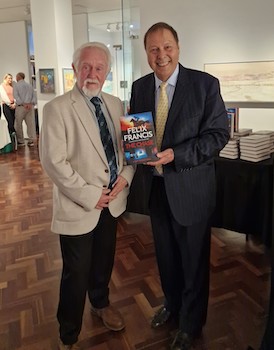
The event, held in a fashionable Mayfair art gallery, attracted a wide cross-section of fans of the horse-racing thrillers which are the core of the Francis family brand, including Sir John Major, Sir Tim Rice and Giles Brandreth, not to mention Professor Barry Forshaw, without whom any book launch would be incomplete.
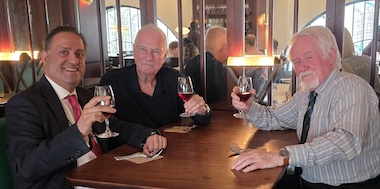
Although for legal reasons (not being invited) I was unable to attend the launch of the new James Bond novel King Zero by Charlie Higson. Nevertheless, it – and spy fiction in general – was high on the agenda for discussion at a lunch the following day with Bond experts Ajay Chowdhury and Raki Rakison. I can report that the discussion ended very amicably when I was allowed to choose the dessert wine – a Vin Santo – to end the meal.
New Stuff
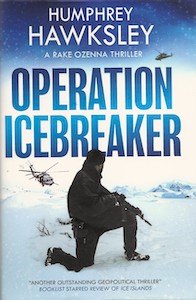
Now out from Severn House is Operation Icebreaker, the latest high-octane thriller from Humphrey Hawksley featuring Rake Ozenna, described by one character as an ‘Alaskan dog soldier’. Ozenna’s Alaskan origins, and the skills he learned in Special Ops, are both vital to his survival as he is plunged from the off into an attack on a US base in northern Greenland. Who would have thought that peaceable, icy Greenland, with its strategic positioning and hidden mineral resources, could be at the heart of an international conspiracy provoking a fairly uninterrupted stream of violence and a high body count, with Ozenna taking out five bad guys in one chapter alone – two of them with his hands tied behind his back! This is a good example of the action thriller that makes one glad one has shares in Glock GmbH.
In his introduction to Golden Age Christmas Mysteries, editor Otto Penzler points out that people who do not like the forced jollity of Christmas are curmudgeons who will like this book because it is a veritable Santa’s sack full of murder and mayhem. He is absolutely right on that score and deserves a bonus point for use of the word ‘curmudgeon’.
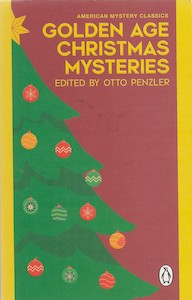
The anthology, published by Penguin as part of their American Mystery Classics series contains stories written between 1938 and 1958 by some well-known names – Anthony Boucher, Carter Dickson, Stanley Ellin, Ellery Queen, Mary Roberts Rinehart, Damon Runyon and John D. MacDonald (with a cracking good cop/sneaky cop tale) – and some less familiar this side of the Atlantic.
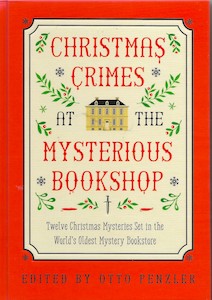
Editor Otto Penzler is perhaps best known for his ownership of the legendary Mysterious Bookshop in New York and a new anthology of seasonal crime stories from Bantam next month celebrates that. Christmas Crimes at the Mysterious Bookshop not only contains stories (by Laura Lippman, Jeffrey Deaver, Jason Starr and others) set in or around the actual bookshop, but several include Otto Penzler himself, though not - I hope – as a victim.
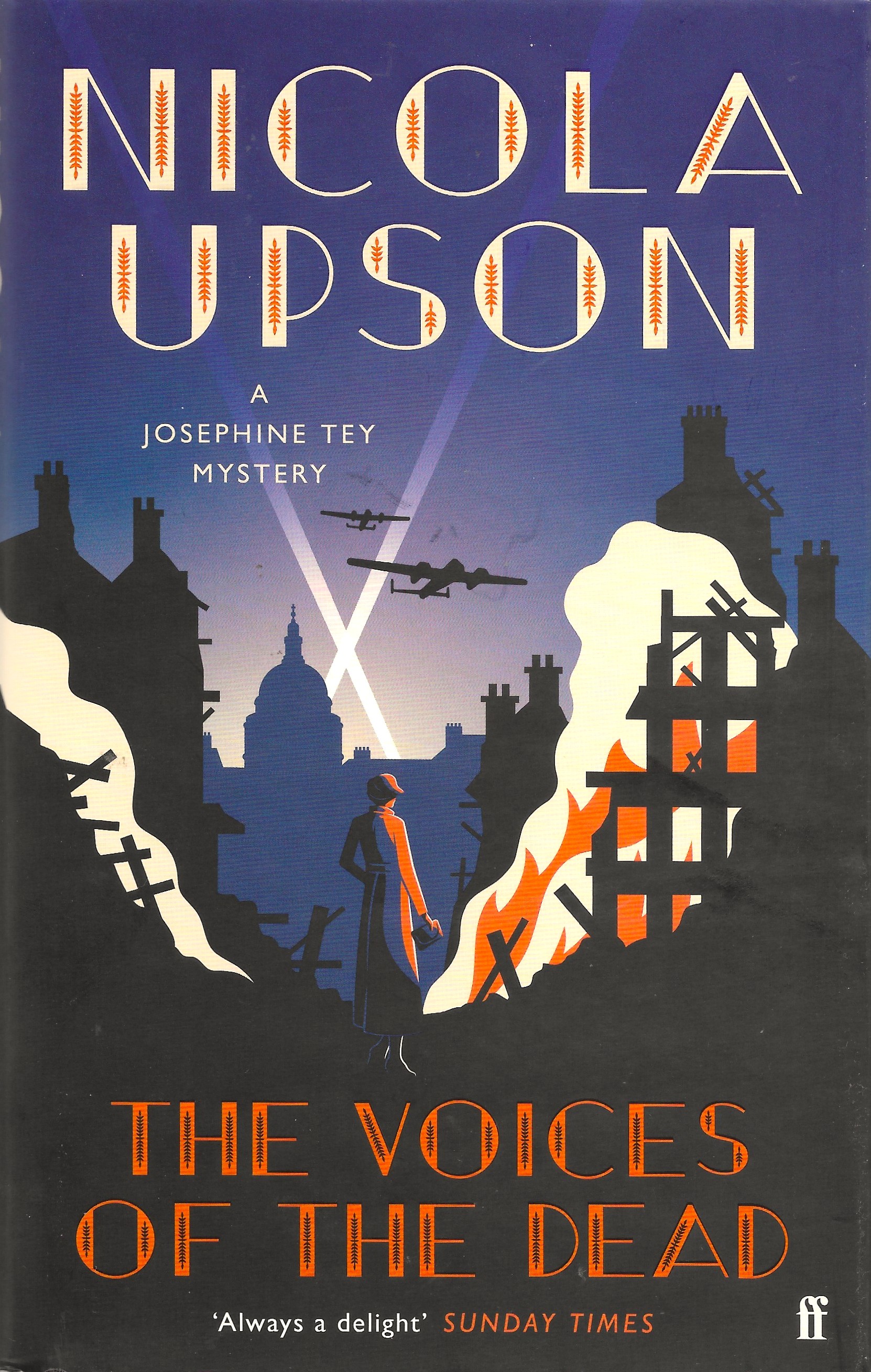
I am looking forward to Nicola Upson’s latest novel to feature Golden Age crime writer turned amateur sleuth Josephine Tey, The Voices of the Dead, which is published by Faber in November. This is, I think, the twelfth outing for Nicola’s fictional creation (who herself was pretty good at fictional creations) and the setting is wartime England, and Wales, where the art treasures of the National Gallery are being hidden deep in the slate mines to avoid destruction in the London Blitz. Be prepared for a cameo appearance by Noel Coward in this delightful series of historical mysteries. I am sure he would have approved of them. I know the late P.D. James did, because she told me so.
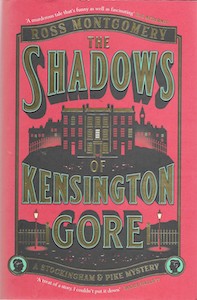
I always understood the term ‘Kensington Gore’ to refer to the fake blood used in Hammer horror films but it is, of course, a real London address adjacent to the Albert Hall and in 1911 number 89 Kensington Gore Mansions was the fictional home of eccentric detective Decima Stockingham and her butler/servant/sidekick Stephen Pike. It is also the setting for the bloody murder of a policeman during a suffragette demonstration in The Shadows of Kensington Gore by Ross Montgomery, published this month by Viking. Decima Stockingham is an unusual detective; confined to a bath-chair, arrogant, something of a bully and incredibly foul-mouthed for an Edwardian lady. Some of her ripe language might be anachronistic, but I would have to consult Susie Dent on that, and Decima shows remarkable restraint in not saying “Don’t tell him, Pike!” when her sidekick (who finds the murdered copper) is questioned by the police. There is also an odious, venal character called Mrs Ripley, though goodness knows where the inspiration for her came from. Overall, a colourful, jolly romp for a detective duo Sherlock Holmes would probably have disapproved of.
From the To-Be-Re-Read Pile
Last time, I announced that I was embarking on a re-read of Ross Macdonald’s series of private eye novels, starting with The Drowning Pool, first published in 1952. Even though I had to look up purse-seiners – a type of fishing boat – I found Macdonald’s style engaging and at times extraordinary for a murder mystery, as in this description of a woman playing a one-armed bandit in a seedy bar: Mechanically, without excitement or any sign of interest, she fed the quarters, one by one into a machine near the door. Somebody phoning long-distance to somebody else who had been dead for years. Some twos and fours, a single twelve, stretched her money out. They went back in as a matter of course. She played the machine as if it were a toneless instrument made to express despair.
And as Archer closes in on a solution to case ruminating on the validity of marriage, but which also involves oil-drilling rights, corrupt police, an angry mob determined to hold a lynching, several badly-treated women and some very suspicious deaths, he concludes: The happy endings and the biggest oranges were the ones that California saved for export.
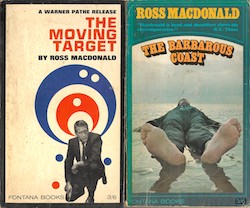
I have now remembered why I liked the Lew Archer books so much, so I have bumped two to the top of my re-read list: The Moving Target and The Barbarous Coast.
Feedback
My Revivals #27 column prompted more positive feedback than usual and it is always very gratifying to learn that there are still people who read and are interested in books. I was assured by my correspondents that they had ordered copies of six of the titles I mentioned (publishers please note); one reader agreed with my admiration for classical scholar (and comedian) Natalie Haynes; two offered to find me a copy of Dennis Wheatley’s The Eunuch of Stamboul; and a work colleague in a former life, the economist (and noted photographer) Chris Thurman, was so taken by my fond memories of visiting the Café Gondré and ‘Pegasus Bridge’ in Normandy that he sent me his picture of the place.
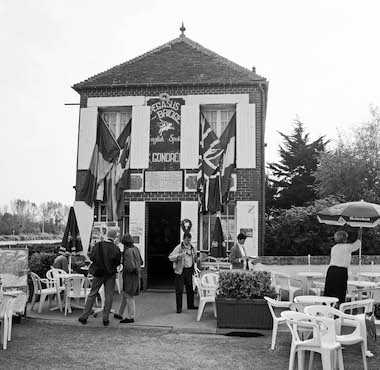
Coincidentally (though not surprising, given the subject matter) a book I have finally tracked down opens with the attack, in the early hours of 6th June 1944 by British glider-borne troops, on that very bridge.
D-Day To Berlin [Hodder & Stoughton] is the book which accompanied the 2005 three-part BBC series, both of which were the brainchild of my old and distinguished friend Andrew Williams. The narrative is provided by eye-witness testimony from participants on both sides in the campaign, illustrated with rarely-seen photographs and though the end of the story is well-known, this is a gripping and dramatic read.
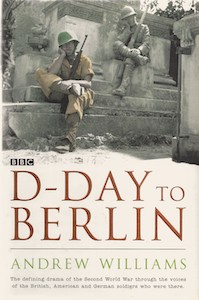
During his career as a writer and director of television documentaries, Andrew established a reputation as something of a military historian, especially with his highly-regarded work on the Battle of the Atlantic. He has, subsequently, turned to the Dark Side and penned a number of excellent spy novels with historical settings. I recommend them most highly, along with D-Day To Berlin.
Gogglebox
In a brief survey of the television schedules in September, I counted twenty-two different detective or police-based crime series on regular offer – not including any historic offerings available on streaming services such as BBCiplayer, More 4 or the excellent Walter Presents.
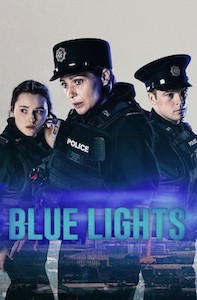
Whilst I am grateful for the chance to revisit the wonderful Homicide: Life on the Streets from thirty years ago and excited at the prospect of new series such as Ludwig and Marble Hall Murders, I am delighted to see the Northern Ireland drama Blue Lights back on the telly. This is an absolutely fantastic ensemble drama about policing in Belfast, with no subject (criminal, political, sectarian or social) left unprodded, top-notch production values and first-rate acting, epecially among the strong female characters. Realistic to the point where it is probably hated by the Northern Ireland Tourist Board.
Late, sad, news
I was saddened, and shocked, to have only just heard that Suffolk-based crime writer Lesley Grant-Adamson died in July, aged 83. Back in 2013, I had the pleasure of editing new editions of three of Lesley’s novels featuring her journalist sleuth Rain Morgan (Lesley was an established Guardian journalist before turning to crime) for the Ostara Crime imprint. All the Rain Morgan books are now available from Joffe Books.
An enthusiastic member of the Crime Writers’ Association, Lesley often told the story that at one CWA meeting in the 1980s she was introduced to the late Len Deighton and her opening words were: “And do you write?”

Len’s reply is not known and although Lesley told the story with impish self-effacement, she is not the only female CWA member to claim that dubious honour.
Broadsword calling Danny Boy…
In 2027, on what will be the 6oth anniversary of the publication of Alistair MacLean’s bestseller Where Eagles Dare, there will be a sequel (Force 10 from Schloss Adler?) published by HarperCollins, written by Australian Anthony O’Neill.
I was told that this ‘continuation’ was being planned earlier in the year, but was sworn to secrecy and am still hazy on the details. The novel may indeed be a prequel rather than a sequel and might be called Where Eagles Die, but until Danny Boy responds to my radio signals, I can say no more.
Man the Lifeboats
I have always strived to keep my musings in Shots unsullied by contemporary political issues but the disgusting activities of the trolls vilifying the lifeboat crews on the south coast who went to the aid of ‘small boats’ crossing the Channel has prompted me to change my charity Christmas card allegience this year to support the brilliant RNLI.
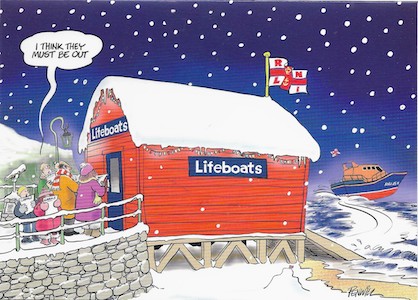
I know I am in the declining minority who still enjoy sending – and receiving – cards at Christmas (physical, not electronic ones), although my list of recipients sadly shrinks every year but I intend to continue the practice.
My admiration for the volunteer crews of lifeboats goes back to my days as a young newspaper reporter when I interviewed a seasoned sea-dog who had been a crewman for fifty years in a boat stationed on the Norfolk coast, without ever learning to swim. When I asked him if this had been a handicap to his career as a lifeboatman, he simply said (though I won’t attempt the accent): “No, ’cos I never fell in the water.”

Pip! Pip!
The Ripster